Slack
Latest versionSlack is a channel-based messaging platform. With Slack, people can work together more effectively, connect all their software tools and services, and find the information they need to do their best work - all within a secure, enterprise-grade environment.
Authentication DetailsComposio-managed OAuth available
Frequently Asked Questions
What does the Composio + Slack integration do?
Composio turns Slack's API into ready-to-use tools that AI agents and automations can call. With the integration you can send and read messages, manage channels, upload files, react to events, search conversations, and more — all through a unified platform. Composio supports two toolkits: Slack (authenticate as a user for workspace-level actions) and Slackbot (authenticate as a bot for in-channel messaging, app mentions, and slash commands). Developers connect their Slack workspace once and then orchestrate any combination of these actions from their agents or workflows.
How does Composio handle my Slack data?
Composio executes API calls on behalf of your connected account. All data is encrypted and subject to a 30-day retention policy. Authentication tokens are encrypted at rest and scoped to the permissions you grant during the OAuth flow. For full details on data handling, retention, and third-party data practices, see our Privacy Policy.
How do I set up custom OAuth credentials for Slack?
Composio-managed auth works without any setup: create a Slack auth config, choose Composio Managed, and connect. Use your own Slack app when you want your own branding, specific scopes, or full control over the app, or when a workspace blocks apps that aren't in the Slack Marketplace.
Create the Slack app
-
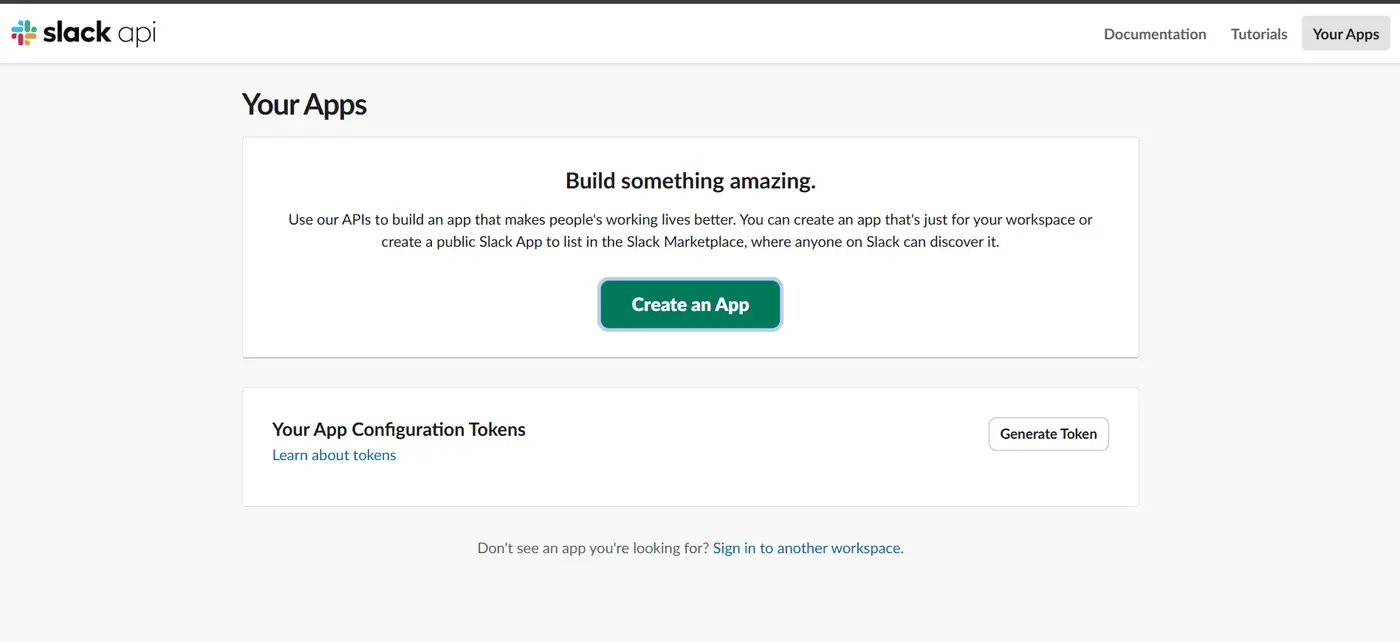
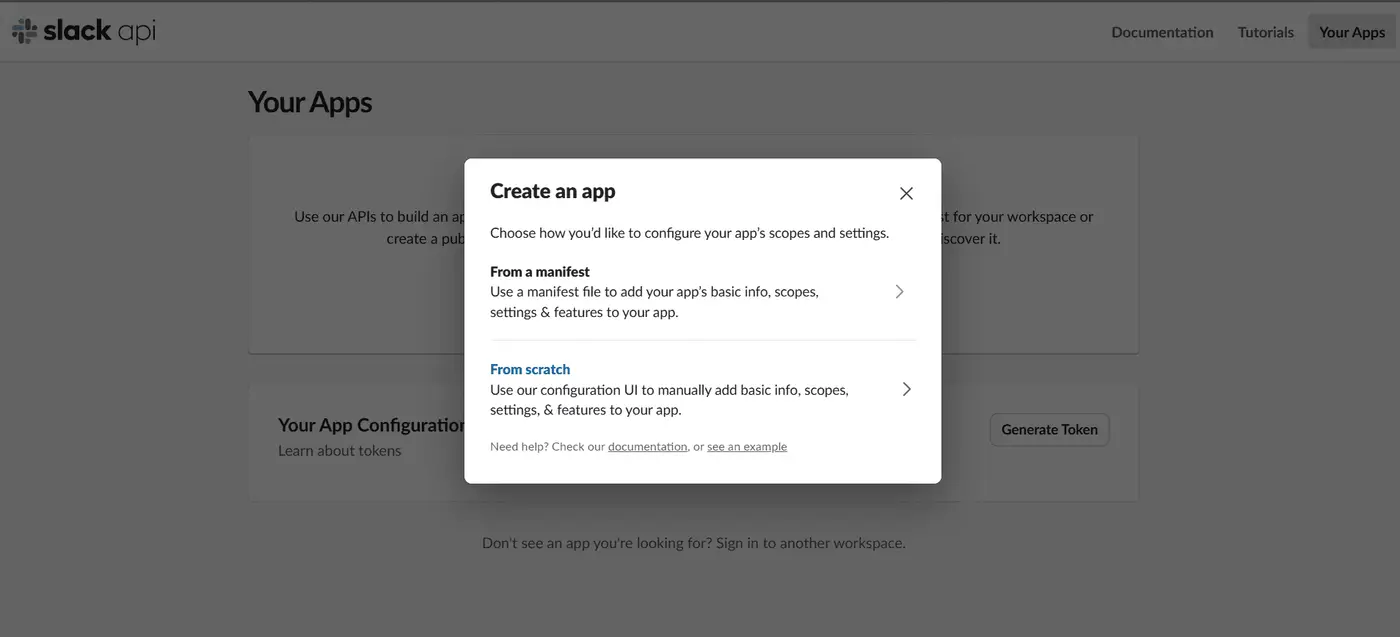
Go to Slack API: Your Apps and click Create New App → From scratch.
-
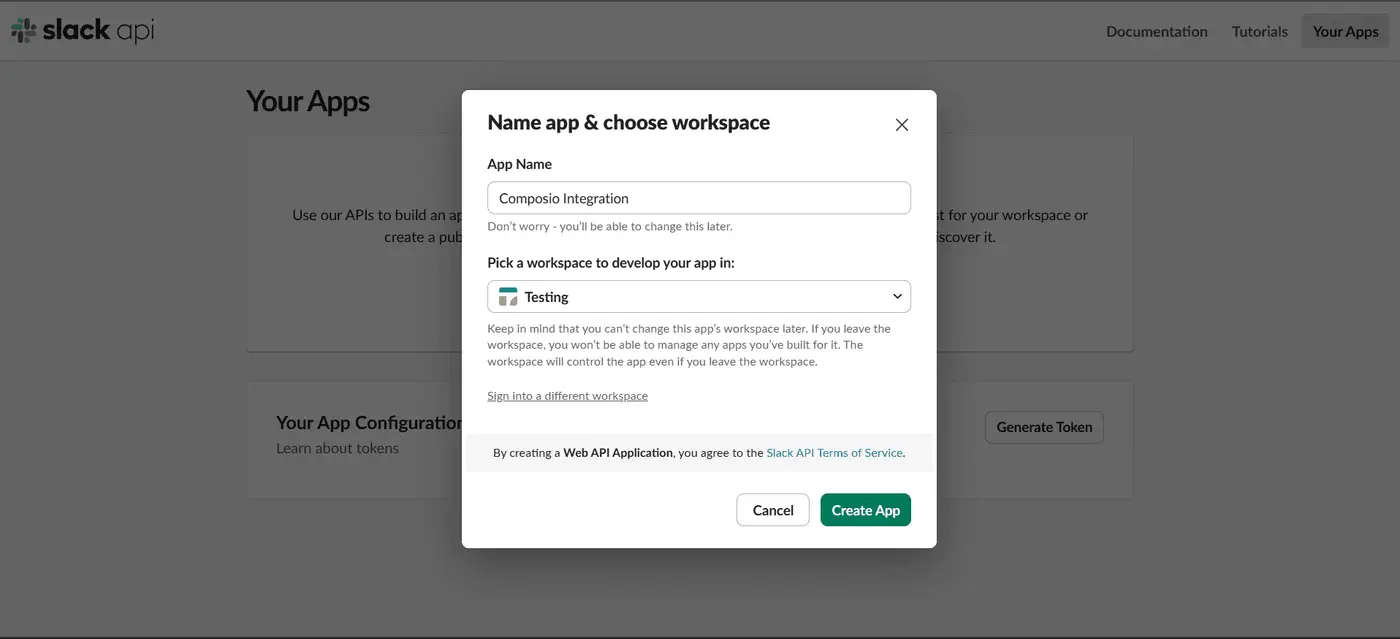
Enter an App Name, select your workspace, and click Create App.
-
Open OAuth & Permissions. Under Redirect URLs, click Add New Redirect URL, enter
https://backend.composio.dev/api/v1/auth-apps/add, click Add, then Save URLs. It must exactly match the auth config'soauth_redirect_urifield.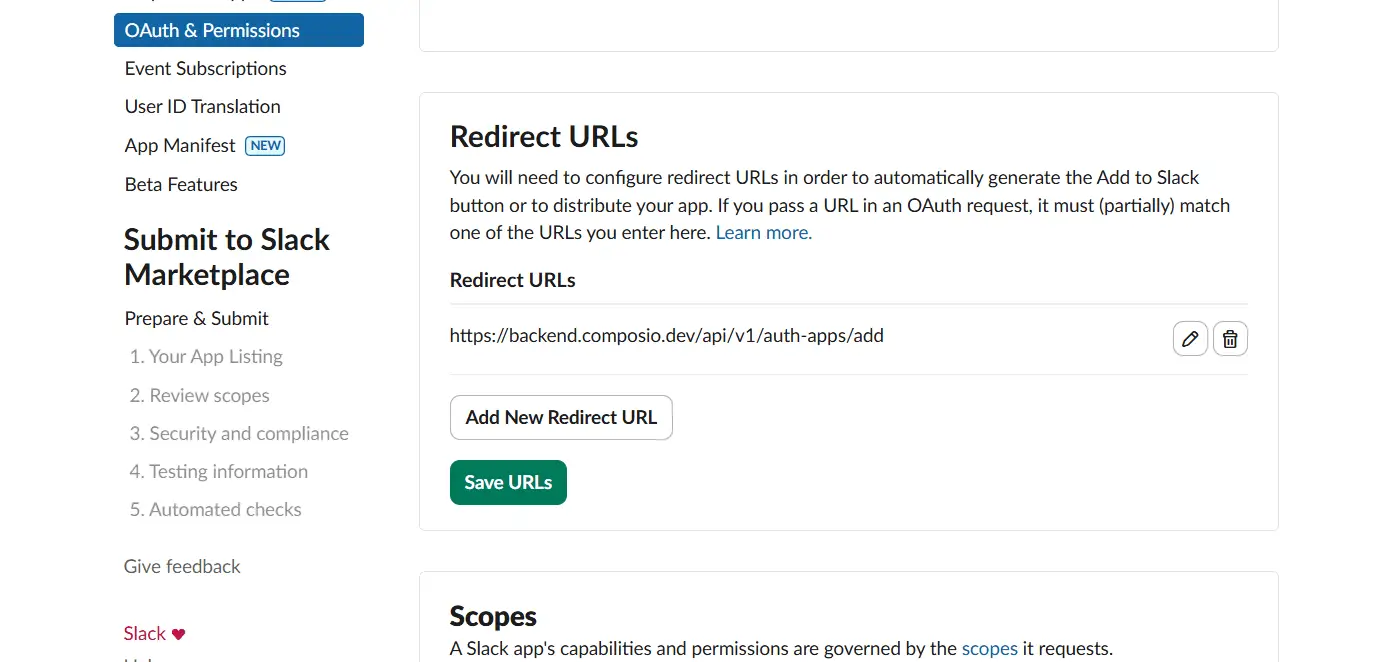
-
On the same page, under Scopes → User Token Scopes, add the scopes your auth config will request. The Slack toolkit acts as the connecting user, and some default scopes, such as
search:read, exist only as user scopes. For example,channels:historyreads channel messages,chat:writesends messages, andusers:readreads user info. For a bot that posts as itself, use the Slackbot toolkit instead. -
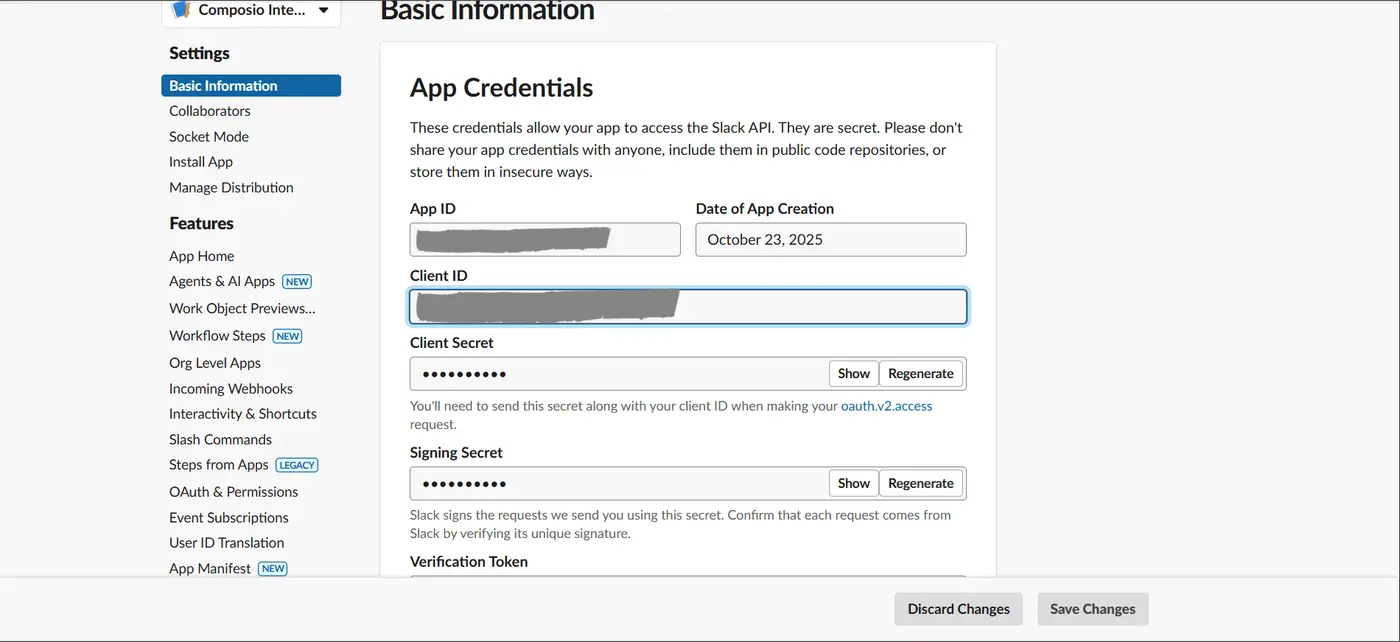
Open Basic Information and scroll to App Credentials. Copy the Client ID, Client Secret, and, if you'll use Slack triggers, the Verification Token.
Create the auth config in Composio
-
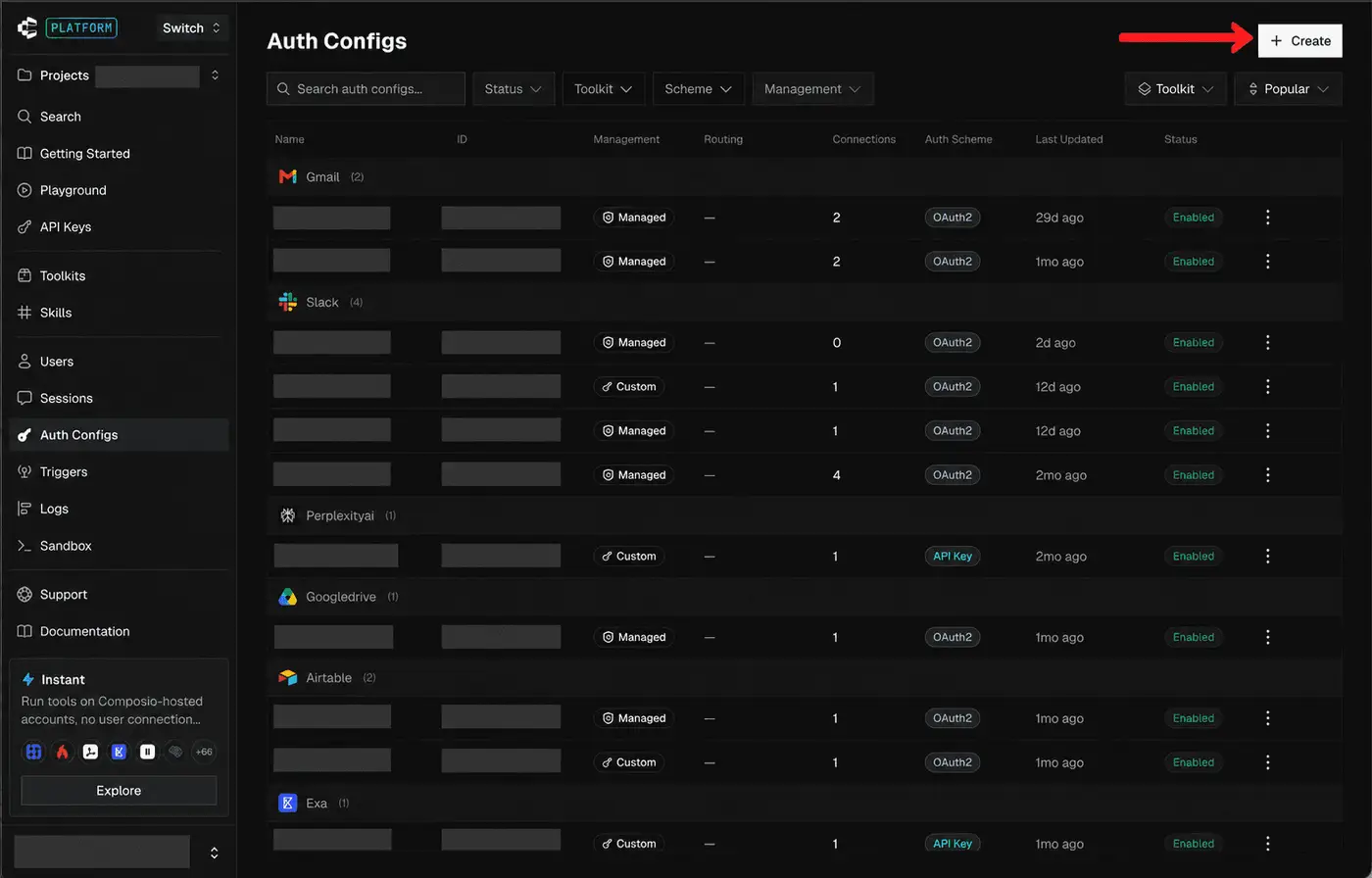
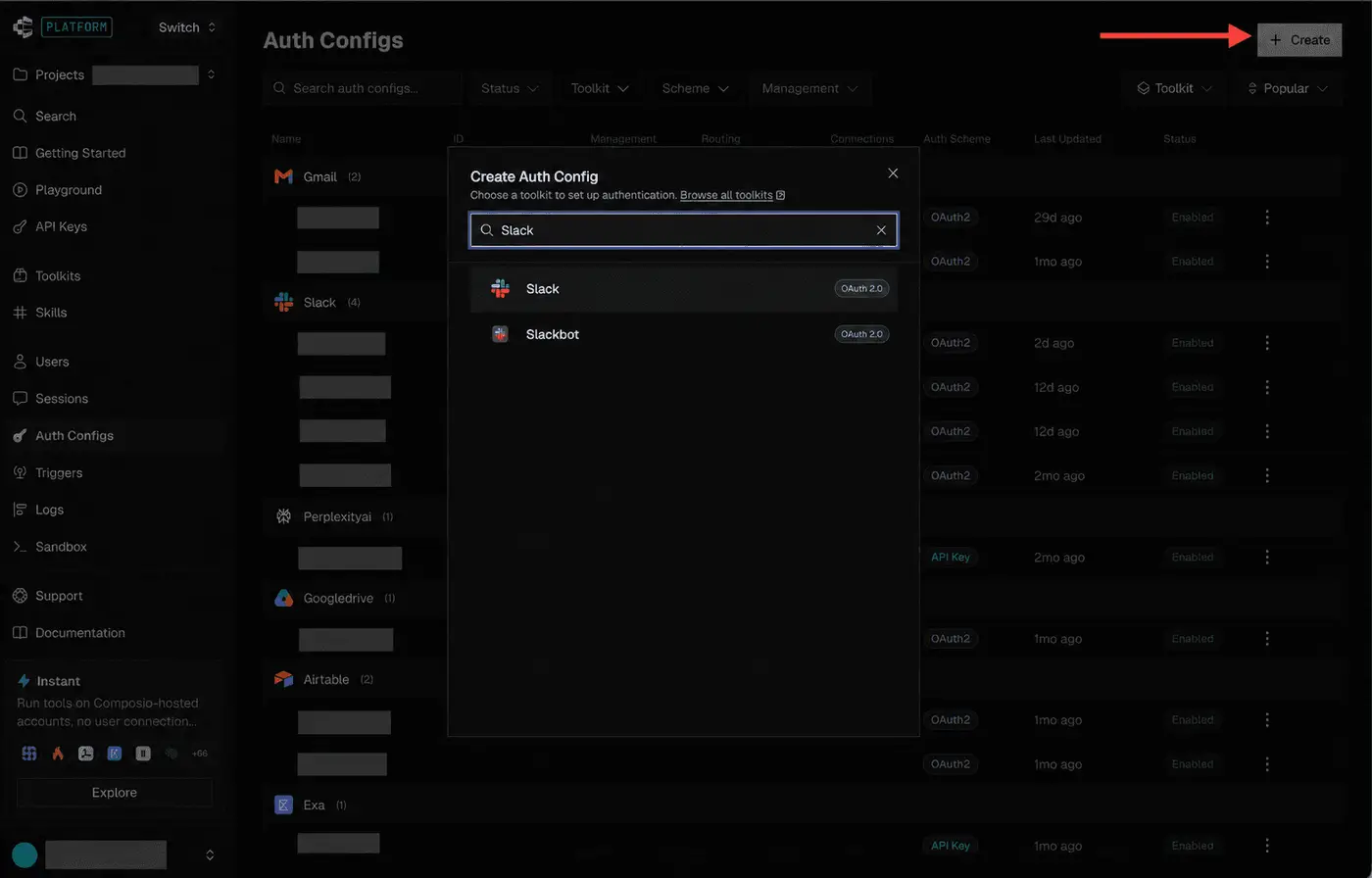
In the Composio dashboard, go to Auth Configs → Create and select Slack.
-
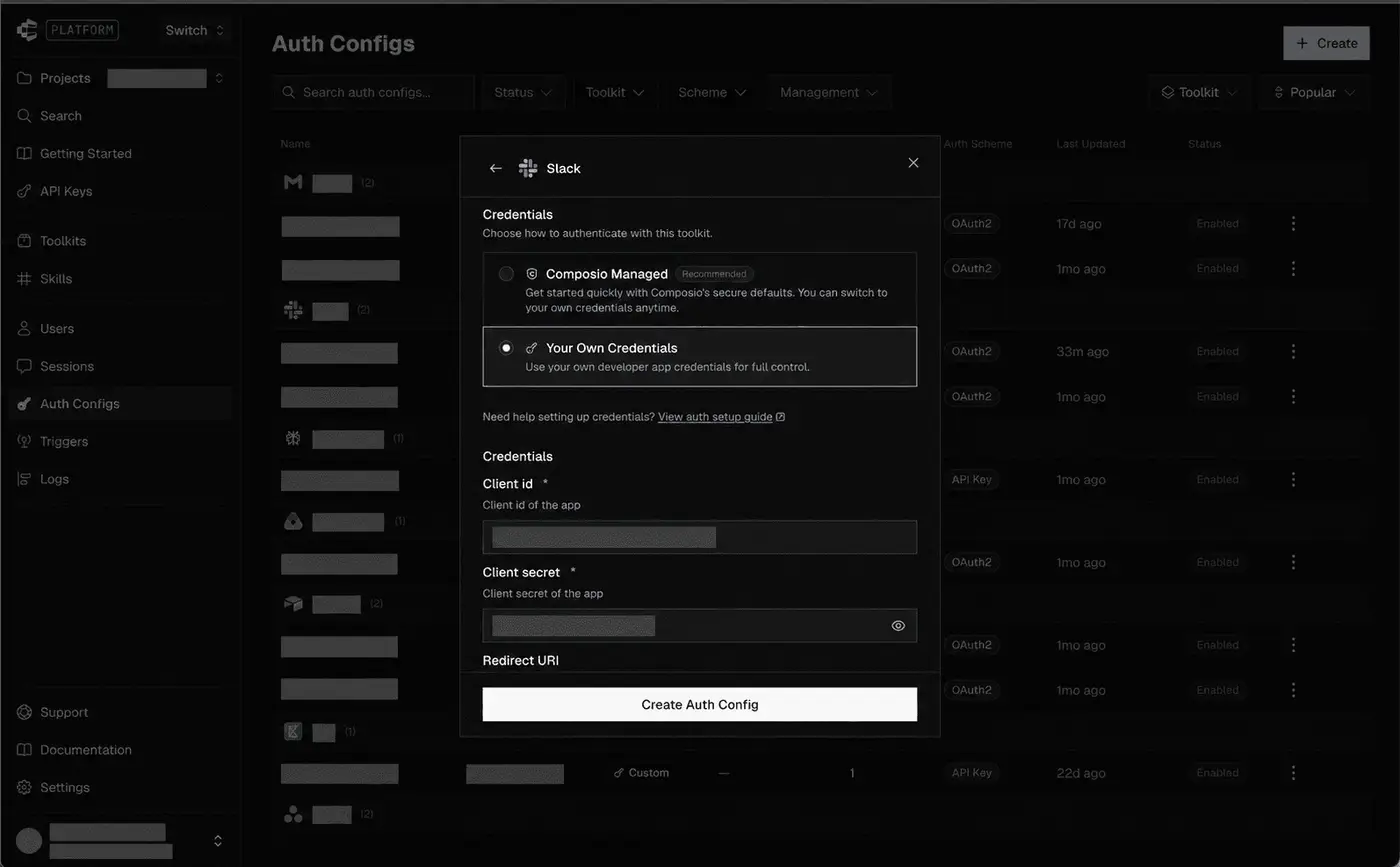
Under Credentials, choose Your Own Credentials and paste the Client ID and Client Secret. Keep the redirect URI as the value you added in Slack.
-
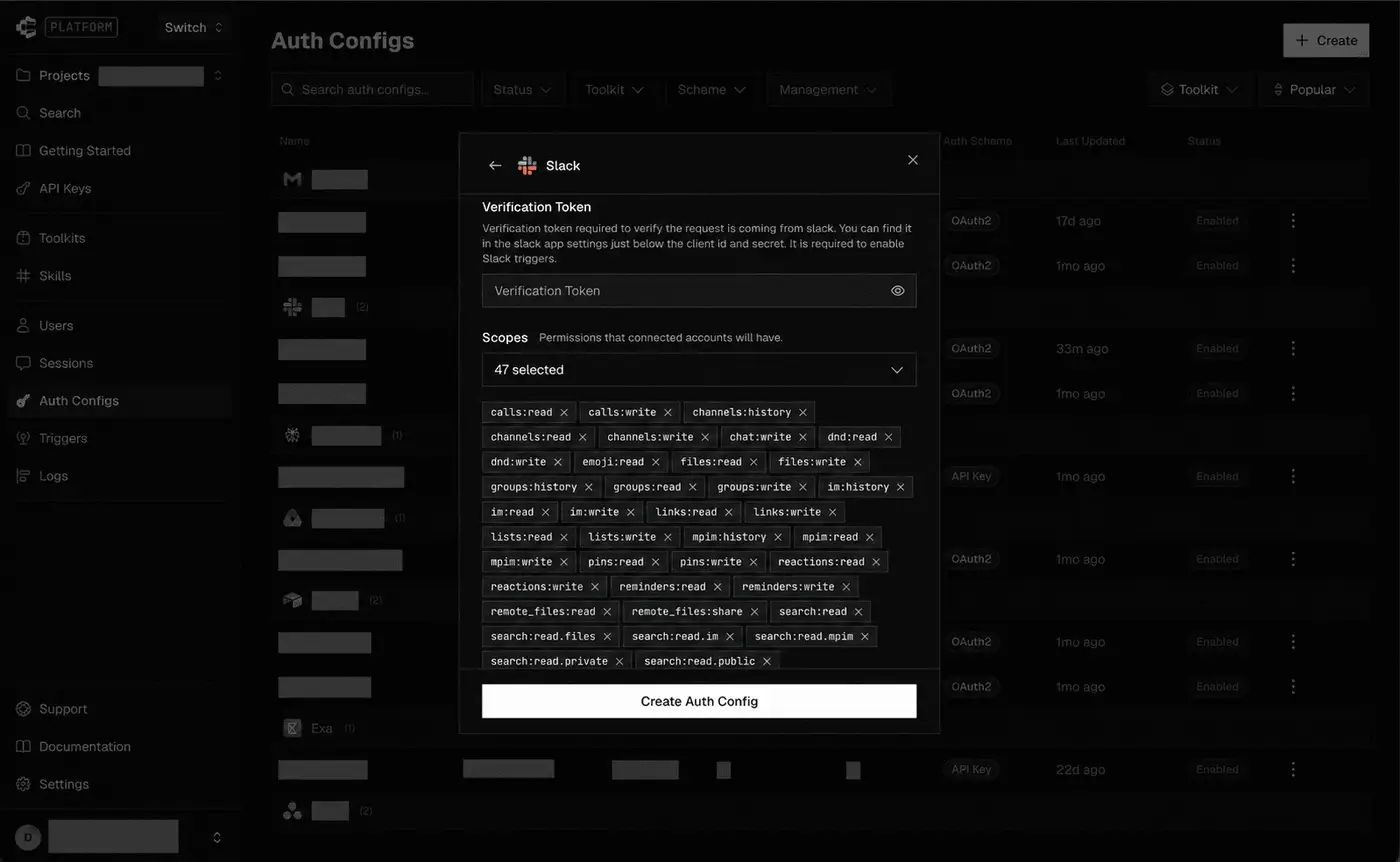
Paste the Verification Token if you need Slack triggers, choose the scopes, and click Create Auth Config.
-
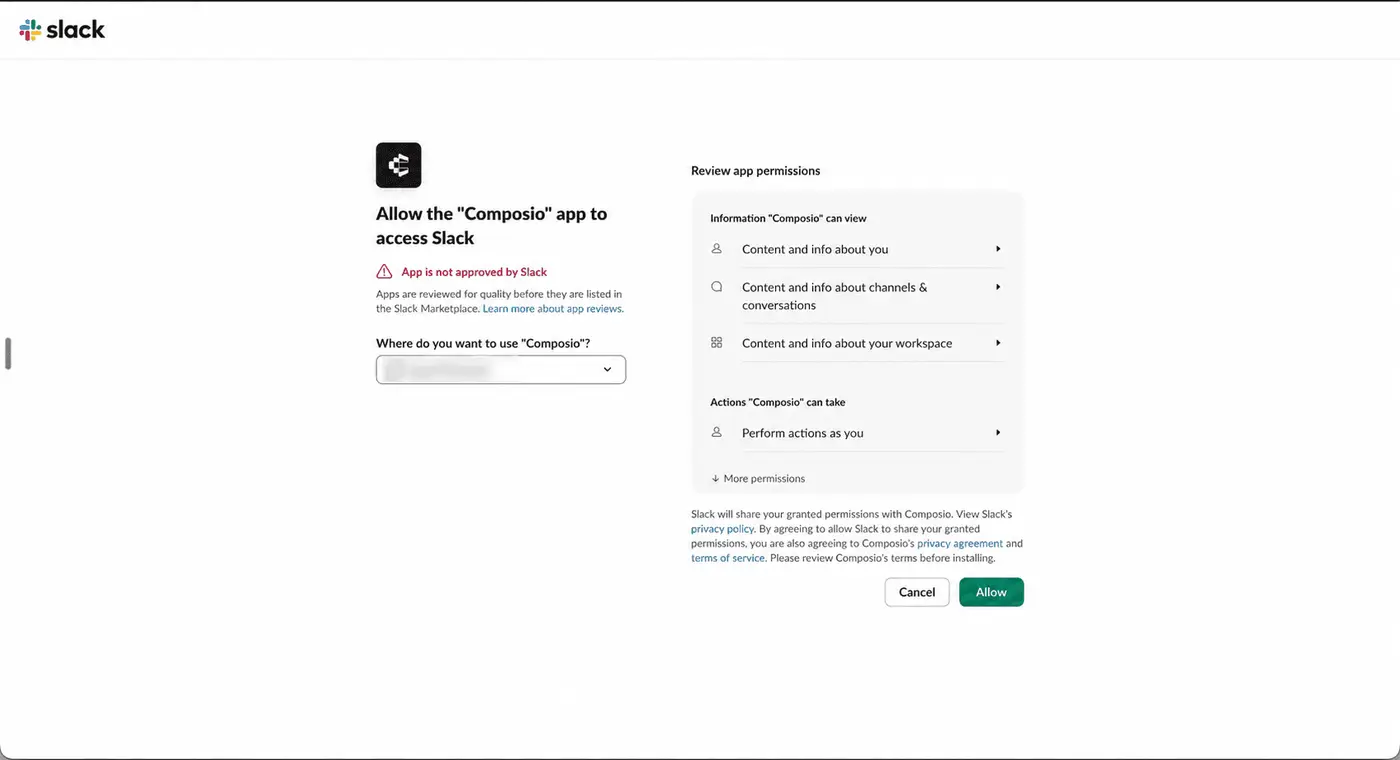
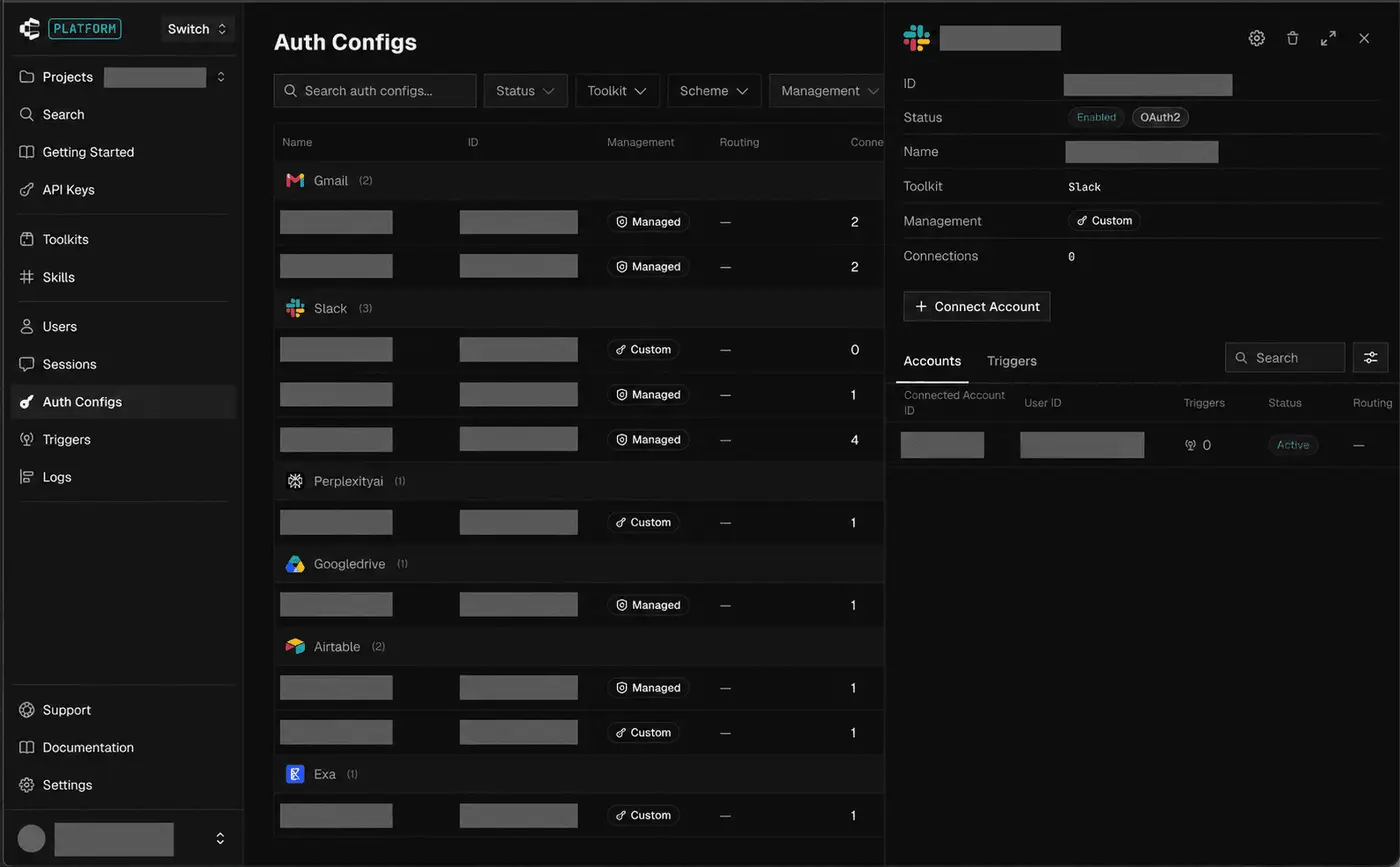
Click Connect Account, select your workspace on the Slack page, review the permissions, and click Allow. Confirm the account shows Active on the auth config's Accounts tab.
See custom auth configs for the general flow, and custom OAuth webhooks for trigger setup with your own app.
Scopes
The default auth config requests a broad set covering channels, groups, DMs, chat, files, reactions, pins, reminders, search, usergroups, and users. Request only what your workflow needs; an agent that only sends messages may need just chat:write. Every scope the auth config requests must also be added to the Slack app, or users see scope errors. See Slack's scopes reference.
Revoke access
- In Composio, delete the connected account from the auth config, or disable the auth config.
- In Slack, a workspace admin can remove the app under Settings & administration → Manage apps, which revokes its tokens right away.
When do users see "This app isn't listed in the Slack Marketplace…"?
When a member of a Slack workspace tries to install a non-Marketplace app. With Composio managed auth, that means the Legacy managed app. The Standard managed app is approved by Slack. See Slack managed apps.
How to resolve: Switch to the Standard managed app if you don't need message triggers. Otherwise, disable Require apps from Slack Marketplace in the workspace's app management settings:
Settings → Apps & Workflows → App Management Settings
Why am I being asked to submit a request during auth?
Because Require approved apps is enabled in the workspace's App Management Settings. Slack is asking for admin/owner approval before completing the install.
How can a workspace member complete the connection without asking for permissions or approvals?
Two ways:
- Disable both Require apps from Slack Marketplace and Require approved apps in the workspace's app management settings.
- Use the workspace's own OAuth app, which is recommended and safest. See How do I set up custom OAuth credentials for Slack? on this page.
What is the difference between Slack and Slackbot toolkits?
Slack is for workspace-level API access (channels, files, users) while Slackbot is bot-centric (messaging, interactivity). Slack triggers cover workspace events; Slackbot covers bot entry points like app mentions, DMs, and slash commands. Slack can post as the app; Slackbot posts as the bot user.
Where can I find Slack's available scopes?
See the Slack scopes reference.
Why am I getting a redirect URI mismatch error?
Update the redirect URL in your Slack App under OAuth & Permissions → Redirect URLs.
How do I set up Slack event webhooks?
With Composio-managed Slack credentials, the webhook endpoint is already provisioned, so just create the trigger. The Standard managed app does not receive the four message triggers. Use the Legacy managed app or your own Slack app for those. See Slack managed apps. If you bring your own Slack OAuth app, see Custom OAuth webhooks.
Why am I getting scope errors on Slack?
Either you're missing a bot scope (add one under OAuth & Permissions) or you have "Insufficient scopes" (ensure all scopes from your auth config are configured in the Slack app).
What does the as_user parameter do in Slack tools?
For the Slack toolkit, set as_user=True to post as the authenticated user. For Slackbot, leave it blank (defaults to false). A missing_charset error usually means invalid as_user, wrong channel ID, or missing required fields.
Why aren't my Slack triggers working?
If you use Composio managed auth, check which managed app the connection uses. The Standard app does not receive SLACK_CHANNEL_MESSAGE_RECEIVED, SLACK_DIRECT_MESSAGE_RECEIVED, SLACK_RECEIVE_BOT_MESSAGE, or SLACK_RECEIVE_MESSAGE. Use the Legacy managed app or your own Slack app for those triggers. See Slack managed apps.
For everything else, see Triggers.
Which Composio managed Slack app should I use?
Slack has two managed apps. Slack has approved Standard and gives it higher rate limits, but it does not receive the four message triggers. Legacy is not approved by Slack and gets lower rate limits, but it receives every Slack trigger. Use Standard unless you need message triggers. See Slack managed apps.
Slack Marketplace warnings during OAuth
Slack may show a Marketplace warning when the OAuth app is not listed or approved in Slack Marketplace. The OAuth flow can still work if the workspace allows non-Marketplace apps, but workspaces with stricter app policies may require admin approval before the connection can complete.
Slack has approved the Standard managed app. The Legacy managed app is not approved, so Slack shows this warning for it. If the warning blocks users, switch to Standard, use the workspace's own Slack OAuth app, or ask a workspace admin to approve the app. See Slack managed apps.

Do I have to be a Workspace Owner to install the app?
In some cases — yes. For example, when installing non-Marketplace apps, you'll need to be an owner to install directly and complete the connection. As a member, you'd need to either request approval, or ask the owner to disable Require approved apps.